
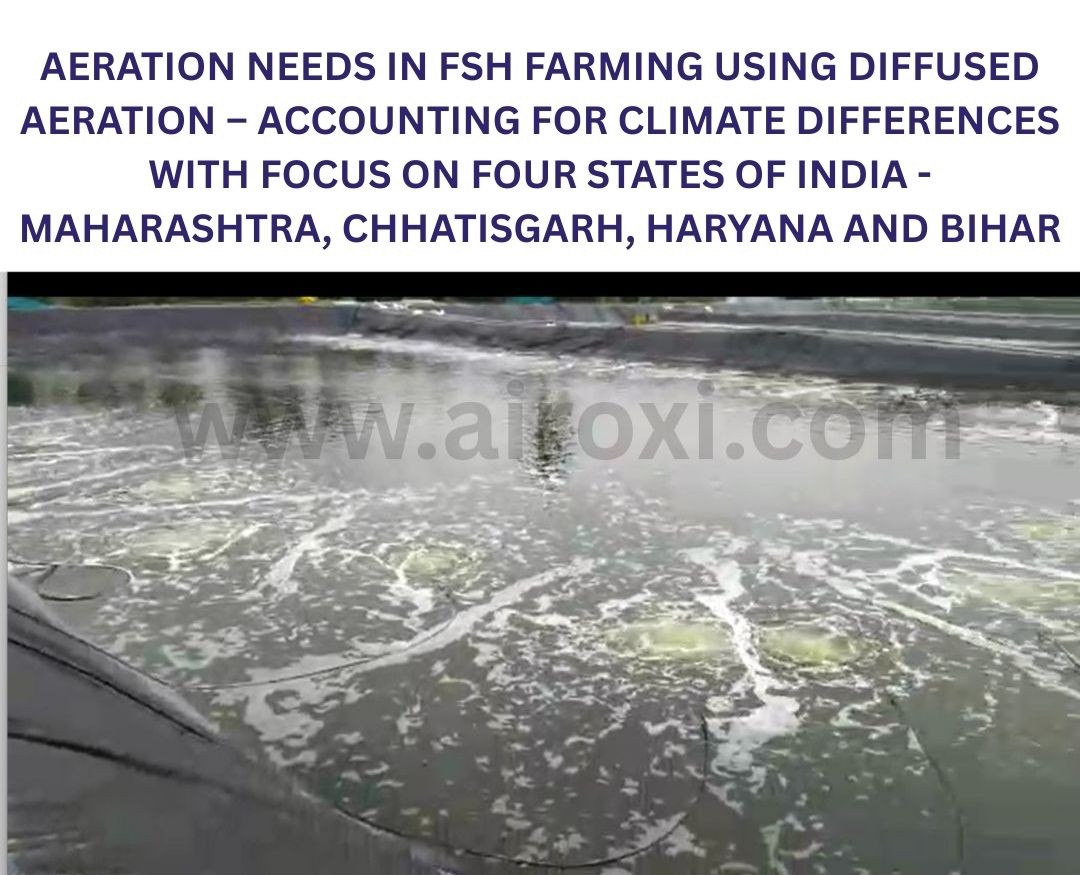
Fish farming is expanding fast across India, and so is the pressure to keep ponds healthy through every season. Whether it’s a carp pond in Bihar, a growing pangasius cluster, or an intensive tank near a city market, one thing stays constant: dissolved oxygen (DO) decides growth, survival, feed conversion, and water quality. When oxygen drops, fish stop feeding, sludge starts “working against you,” ammonia becomes more toxic, and disease pressure rises.
That’s exactly where AirOxi Tube fits in. It’s designed to increase aeration efficiently and evenly, helping farmers maintain stable oxygen levels without turning the pond into a washing machine. And that matters even more in states like Maharashtra, Haryana, Bihar, and Chhattisgarh, where fish culture is growing under very different climates and pond conditions.
Why aeration is the backbone of profitable fish farming
In a pond, oxygen isn’t just used by fish. It’s consumed by:
- plankton and algae (especially at night)
- decomposing feed and organic waste on the bottom
- beneficial bacteria that convert harmful ammonia to safer forms
This means DO can crash even in ponds that look fine. The typical danger windows are:
- late night to early morning (lowest DO)
- after heavy feeding
- after rains / cloudy days
- during heat waves
- when ponds carry high organic load
Aeration is not only “for emergencies.” It’s a production tool: better oxygen means better appetite, better digestion, faster growth, and lower mortality.
How AirOxi Tube increases aeration (in practical farm terms)
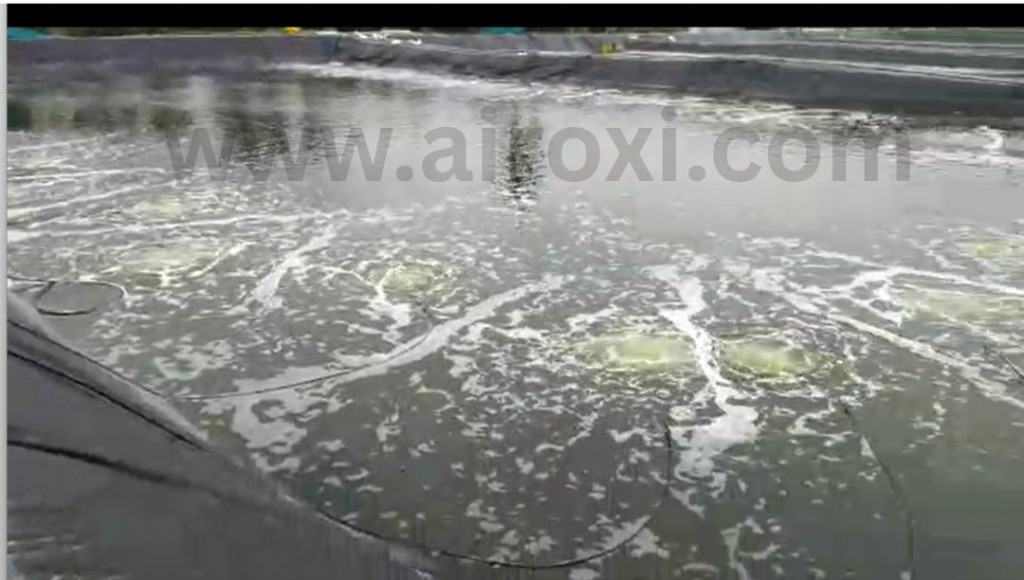
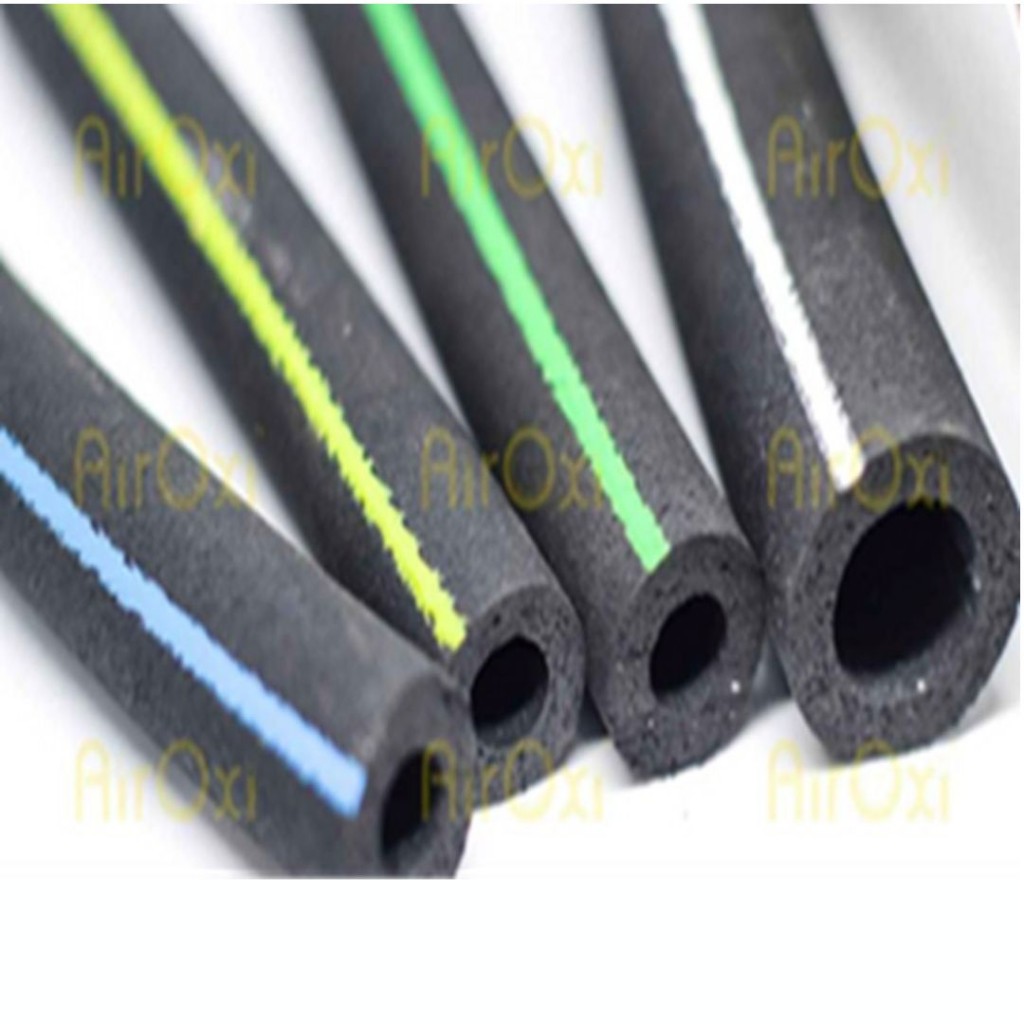
Traditional aeration options often create oxygen mostly near the surface or in one corner. AirOxi Tube, by design, targets uniform oxygen distribution by releasing air in a way that helps oxygen mix through the water column more evenly.
Here’s what that delivers on the farm:
1) More uniform DO across the pond
Instead of having “oxygen-rich zones” and “dead zones,” AirOxi Tube helps spread aeration so fish don’t crowd near one aerator. This reduces stress, improves feeding behaviour, and prevents bottom areas from turning anaerobic.
2) Better bottom health and reduced toxic gases
Many ponds suffer from black sludge, hydrogen sulphide smell, and rising ammonia—especially where feeding is heavy. With improved aeration and circulation near the pond bottom, AirOxi Tube supports the biology that breaks down waste more cleanly. The result is:
- less bottom foul smell
- fewer sudden “gas events”
- more stable water parameters
3) More stable plankton and less night-time DO crash
Farmers often see DO drop sharply after midnight when plankton consume oxygen. Because AirOxi Tube supports continuous and evenly spread aeration, it helps buffer those drops—especially useful during cloudy spells or monsoon transitions.
4) Lower power wastage from over-aerating one spot
When aeration is uneven, farmers compensate by running systems longer. A more distributed aeration approach means you’re not “over-oxygenating” one corner just to save another. That can translate into more effective oxygen per unit of energy, depending on farm layout and operating practice. More info https://airoxitube.blogspot.com/2025/07/choosing-right-airoxi-aeration-tube.html
Four State-wise examples based on different geography and climate
Maharashtra: heat, evaporation, and variable pond depths
In many parts of Maharashtra, summer heat can push pond temperatures high, and warm water holds less oxygen. Add intensive feeding and you get morning DO dips and stressed fish. AirOxi Tube helps by:
- maintaining more consistent DO during hot periods
- supporting better mixing in ponds where water level changes due to evaporation
- improving bottom conditions in farms that feed heavily for faster growth
For Maharashtra farmers targeting higher density culture, this can be the difference between “good growth with risk” and “good growth with control.”
Haryana: high intensity, nutrient load, and winter swings
Haryana’s aquaculture often leans toward high-input, intensive management, where feed load and organic load can climb quickly. Aeration isn’t optional—it’s the safety net. AirOxi Tube helps because:
- it supports oxygen where waste accumulates, not just at the surface
- it reduces the chances of localized oxygen shortage that triggers disease
- it supports better water quality management when stocking and feeding are high
Also, Haryana sees colder periods where pond dynamics change. Consistent aeration supports the pond ecosystem when natural oxygen production from algae becomes unpredictable.
Bihar: rapid expansion, monsoon stress, and night-time crashes
Bihar has seen strong growth in pond-based fish culture, and many ponds are vulnerable to monsoon-driven fluctuations—runoff, turbidity, and sudden algae shifts. In these conditions, DO crashes can happen quickly, especially early morning. AirOxi Tube can help by:
- providing steady aeration even when sunlight-driven oxygen production drops
- reducing stress events after rain and cloudy days
- keeping fish active and feeding more consistently
This is particularly useful for farmers who can’t afford daily water exchanges and depend on aeration to stabilize the pond.
Chhattisgarh: pond culture scale, organic buildup, and seasonal variability
Chhattisgarh has abundant water bodies and pond culture potential, but seasonal changes and organic accumulation can reduce yields. Many farms face:
- uneven pond bottoms
- variable water depth
- organic load from feed and natural productivity
AirOxi Tube helps improve aeration spread and supports better bottom conditions, which can raise survival and improve growth performance across the season. www.airoxi.com
Where AirOxi Tube makes the biggest difference on the farm
You’ll see the strongest impact if your pond has one or more of these:
- stocking density is increasing year-on-year
- fish gasp at surface early morning (even occasionally)
- black sludge, bad smell, or frequent ammonia spikes
- high feed input and strong plankton bloom cycles
- disease outbreaks after weather changes
In these cases, AirOxi Tube becomes not just an aeration tool, but a risk-control system for the whole pond.
A simple operating mindset for farmers
To get the best outcome:
- run aeration during high-risk hours (late night to early morning)
- increase aeration after heavy feeding days
- be proactive during cloudy/monsoon spells
- observe fish behaviour daily—fish tell you the DO story before test kits do
The bottom line
Across all climates, considering here examples of Maharashtra, Haryana, Bihar, and Chhattisgarh, the challenge is the same even if the climate differs: fish farming is becoming more intensive, and ponds need stable oxygen and stable biology. AirOxi Tube increases aeration by improving distribution and supporting better bottom and water conditions—leading to healthier fish, more reliable feeding, and fewer sudden losses.
In modern aquaculture, oxygen isn’t just a parameter. It’s profit. And the right aeration approach is one of the smartest upgrades a fish farmer can make.
CONTACT US
🌐 www.airoxi.com
📞 +91 70410 04098 |
📧 info@airoxi.com



 WhatsApp us
Leave A Comment